The new year always feels like a reset button. A clean slate. A fresh start. And yet, so many people carry the same habits, the same delays, and the same half-finished dreams right into January. If this sounds familiar, you’re not broken — you’re human. Learning how to stop procrastinating in the new year is less about perfection and more about awareness, systems, and small, consistent actions.
This year doesn’t need more motivation. It needs better structure.
Why We Procrastinate (Even When We Really Care)
Procrastination isn’t laziness. It’s emotional regulation.
Most people avoid tasks because of:
Fear of failure
Fear of success
Overwhelm
Perfectionism
Lack of clarity
Your brain prefers short-term comfort over long-term payoff. That’s why scrolling your phone feels easier than writing that plan, starting that project, or finally changing your habits.
The start of a new year is the perfect time to interrupt that pattern.
Looking Back to Move Forward
Before charging ahead, it’s powerful to pause.
Ask yourself honestly:
What did I say I was going to do this year?
What did I actually finish?
Where did I hesitate or delay the most?
At SmarterBetterDaily, we’ve already covered topics that connect directly to this:
Digital detox and attention control
Micro habits and small daily systems
Focus techniques and deep work
Those ideas all point to one truth: progress doesn’t come from intensity, it comes from systems.
How to Set Real Goals That Don’t Die in February
Many goals fail because they’re vague.
Instead of:
“I want to be more productive”
Try:
“I will work in 45-minute focused blocks, 5 days per week.”
One method that works extremely well:
The 3-Layer Goal System
Vision goal (12 months)
↓
Quarterly focus (90 days)
↓
Weekly actions (tiny, realistic steps)
When your brain knows exactly what to do next, procrastination loses its power.
How to Stop Procrastinating in the New Year (Practical Framework)
Here’s a practical way to finally stop procrastinating in the new year without burning yourself out.
Start with the 5-Minute Rule
Tell yourself: “I only need to work on this for five minutes.”
Most of the time, you’ll continue. The resistance is in the starting.
Use Environment Design
Don’t rely on willpower. Change your surroundings:
Keep your phone out of reach while working
Block distracting websites
Use a clean, limited workspace
Shrink the task
Instead of:
“Write the article”
Break it into:
Open document
Write 3 bullet points
Write one rough paragraph
Your brain hates big, blurry tasks. It tolerates tiny clear ones.
Books That Fit This New Year Mindset
If you want to go deeper, these books pair perfectly with a new-year reset:
Atomic Habits by James Clear
No matter your goals, Atomic Habits offers a proven framework for improving--every day. James Clear, one of the world's leading experts on habit formation, reveals practical strategies that will teach you exactly how to form good habits, break bad ones, and master the tiny behaviors that lead to remarkable results.
BUY NOW
The War of Art by Steven Pressfield
The War of Art emphasizes the resolve needed to recognizeand overcome the obstacles of ambition and then effectivelyshows how to reach the highest level of creative discipline.
Think of it as tough love . . . for yourself.
BUY NOW
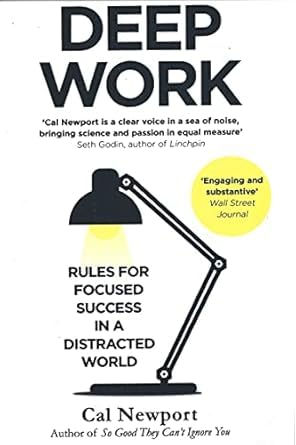
Deep Work by Cal Newport
What is Deep Work?
Deep work is the extraordinary ability to focus without distraction on demanding cognitive tasks. This skill allows you to quickly absorb complex information and deliver superior results in less time. More than productivity, deep work offers the fulfillment that comes from true craftsmanship — a superpower in the competitive, distraction-filled world of the 21st century.
Getting Things Done by David Allen
Since it was first published almost fifteen years ago, David Allen’s Getting Things Done has become one of the most influential business books of its era, and the ultimate book on personal organization. “GTD” is now shorthand for an entire way of approaching professional and personal tasks, and has spawned an entire culture of websites, organizational tools, seminars, and offshoots.
BUY NOWEach of these teaches the same principle: consistency beats intensity.
Quotes That Hit Hard (But True)
Here are a few that align strongly with this mindset:
“You don’t rise to the level of your goals. You fall to the level of your systems.” – James Clear
“Action cures fear.”
“You don’t need more time. You need more focus.”
These aren’t just motivational. They’re operational.
The Honest Part: Discipline Is Not Sexy (But It’s Everything)
This part matters.
You will not feel motivated every day in the new year.
You will not feel inspired every morning.
You will doubt your goals more than once.
That’s normal.
The people who win aren’t more motivated — they’re better at acting despite not feeling ready.
Procrastination isn’t defeated by inspiration.
It’s defeated by structure.
Simple New Year System You Can Stick To
Try this daily framework:
Morning:
10 minutes planning
Write your top 3 priorities
Midday:
One deep work block (minimum 30 minutes)
Evening:
Quick reflection
One small win written down
That’s it. Not complicated. Not flashy. But extremely effective.
How This Ties Into Your Bigger Life
This isn’t only about work.
When you stop procrastinating, you:
Respect your own time more
Build confidence with each finished task
Reduce long-term stress and anxiety
Create momentum that spills into health, relationships, and self-respect
The new year isn’t about becoming a “new you.”
It’s about becoming a more consistent you.
We’d love to hear from you.
Did this help you rethink how you approach the new year?
What goal are you most focused on this year?
And what topic would you like our team to cover next?
Leave a comment — we read them all and use your input to shape future articles.