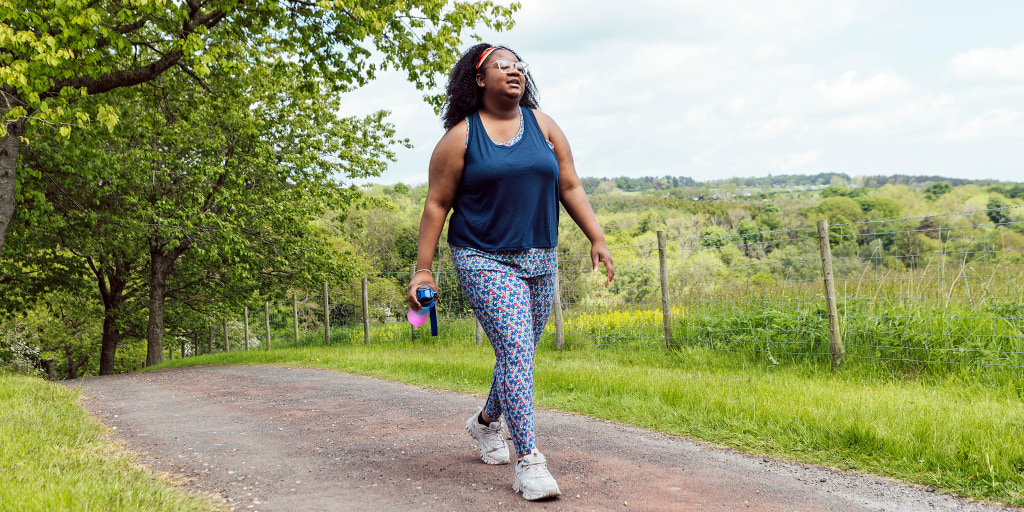
Interval walking doesn’t look impressive on Instagram. No barbells. No sweat-drenched selfies. No heart rate records.
And yet, for millions of people, it’s quietly becoming the most sustainable fat-burning strategy they’ve ever followed.
It usually starts the same way.
Someone goes for a walk — not to train, not to optimize, just to clear their head. They walk a little faster. Then slow down. Then speed up again. Without realizing it, they’re doing interval walking. And weeks later, something unexpected happens: they feel fitter, lighter, more energetic — without feeling broken.
That’s the power of this trend.
What Is Interval Walking?
Interval walking is exactly what it sounds like:
Alternating periods of brisk walking with slower recovery walking.
A simple structure looks like this:
2–3 minutes fast walking (challenging but sustainable)
2–3 minutes slow walking
Repeat for 20–40 minutes
No equipment. No gym. No complicated programming.
But don’t let the simplicity fool you.
Why Interval Walking Works (The Science)
Interval walking sits in a powerful middle ground between steady walking and high-intensity training.
Research from the Japanese Institute of Health and Sports Sciences found that interval walking:
Improves cardiovascular fitness more than steady walking
Increases fat oxidation
Improves insulin sensitivity
Lowers blood pressure
A landmark study by Nemoto et al. (2007) showed that older adults doing interval walking improved VO₂ max and leg strength significantly more than those walking at a constant pace.
This matters because fat loss and metabolic health are not about suffering — they’re about consistency plus stimulus.
Why Interval Walking Is Exploding Right Now
This trend fits perfectly into modern life.
1. It’s Low Impact, High Return
No pounding joints. No recovery debt. Ideal for:
Beginners
Overweight individuals
People returning from injury
Busy professionals
2. It Trains the Metabolism
By alternating intensities, you train:
Fat-burning pathways
Mitochondrial efficiency
Cardiovascular adaptability
3. It Builds Fitness Without Burnout
You finish feeling better, not destroyed.
That’s why interval walking aligns perfectly with the shift toward longevity-focused fitness.
Interval Walking vs Traditional Cardio
tional steady walking:
Good for movement
Limited metabolic stimulus
Running or HIIT:
High stimulus
High recovery cost
Interval walking:
Strong stimulus
Low recovery cost
Sustainable long term
This balance is exactly why experts increasingly recommend it.
How to Start Interval Walking (Beginner-Friendly)
You don’t need perfection — you need rhythm.
Simple Starter Plan
5-minute warm-up walk
1 minute fast / 2 minutes slow (repeat 6–8x)
5-minute cool-down
Total time: ~25 minutes.
As fitness improves:
Increase fast intervals
Shorten recovery
Add hills or incline
Fat Burning Without Stress Hormone Overload
One underrated benefit of interval walking is lower cortisol impact.
High-intensity training, when overused, can:
Increase stress hormones
Stall fat loss
Disrupt sleep
Interval walking:
Elevates heart rate
Improves insulin sensitivity
Keeps stress manageable
This makes it especially effective for people stuck in fat-loss plateaus.
Tools That Make It Easier
Recommended tools for interval walking:
Comfortable walking shoes with good heel support
Fitness tracker or smartwatch (for pace awareness)