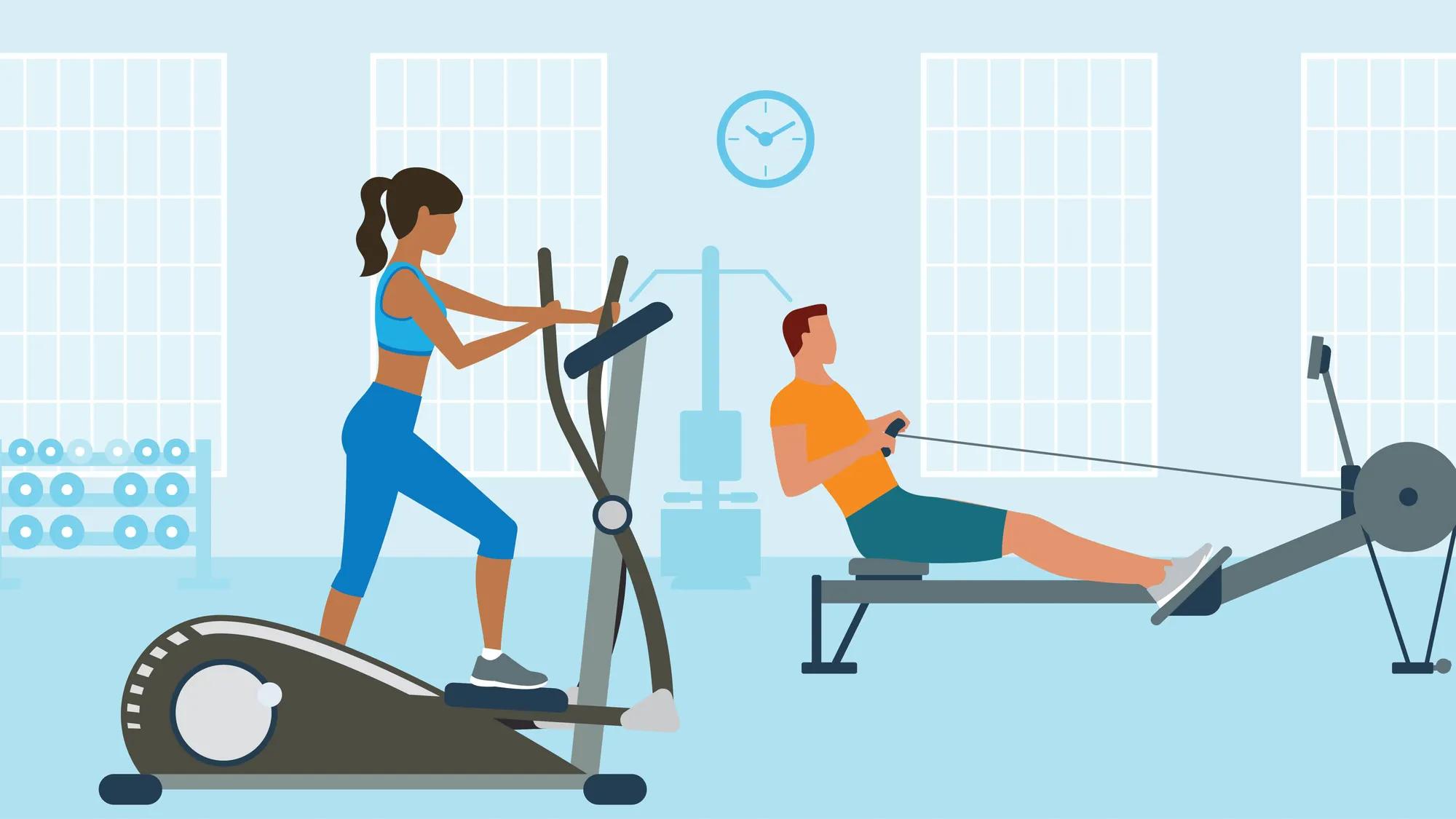
Zone 2 cardio sits in a specific heart-rate range: roughly 60–70% of your maximum heart rate.
In practical terms, that means:
You can still hold a conversation
You feel like you’re working, but not struggling
Breathing is controlled and rhythmic
Examples include:
Brisk walking
Easy cycling
Light jogging
Rowing at a steady pace
Most sessions last 30–60 minutes.
And yes — if you’re used to high-intensity training, it can feel almost frustratingly slow.
But that’s exactly the point.
Why Everyone Is Suddenly Talking About It
Fitness culture is shifting from short-term transformations toward something bigger: longevity.
Instead of asking, “How fast can I lose weight?” people are starting to ask:
“How can I still be strong and energetic at 70?”
Zone 2 training became popular because it improves something many traditional workouts ignore: mitochondrial health.
Mitochondria are the tiny “power plants” inside your cells. The stronger they are, the better your body can produce energy and burn fat efficiently.
Zone 2 cardio specifically targets this system by:
Increasing mitochondrial density
Improving fat oxidation
Enhancing aerobic capacity
In simple terms, it builds your body’s engine rather than just the horsepower.
The Science Behind the Trend
Researchers studying endurance and metabolic health have repeatedly shown that low-intensity aerobic training creates powerful physiological adaptations.
Zone 2 cardio helps:
Improve fat metabolism
Increase aerobic efficiency
Support cardiovascular health
Improve recovery between high-intensity workouts
Many longevity experts now recommend 2–4 hours per week of zone 2 training as a foundation for long-term health.
It’s not flashy.
But it’s extremely effective.
Why Most People Accidentally Skip It
Ironically, many fitness enthusiasts spend most of their time in what coaches call the “grey zone.”
That’s the moderate intensity level where workouts are:
Too hard to recover from easily
Too easy to trigger maximum adaptations
Zone 2 solves this problem by intentionally lowering intensity so the body can develop endurance capacity without excessive stress.
The result:
Better recovery
Stronger aerobic base
Improved long-term performance
How to Find Your Zone 2
The easiest method is the conversation test.
If you can talk in full sentences without gasping for air, you’re probably in zone 2.
For a more precise approach:
Estimate your max heart rate
Multiply it by 60–70%
Stay within that range during cardio
For example:
If your max heart rate is 180 bpm:
Zone 2 range ≈ 108–126 bpm
Fitness watches can track this automatically, but even simple awareness of breathing and effort works surprisingly well.
The Ideal Weekly Structure
One reason zone 2 cardio is trending is that it fits perfectly alongside strength training.
A simple weekly structure might look like this:
Strength Training 3–4 sessions per week
Zone 2 Cardio 2–3 sessions per week (30–45 minutes)
This combination delivers:
Muscle development
Cardiovascular health
Sustainable recovery
Instead of exhausting your body, you build capacity gradually.
Polar H10 Heart Rate Monitor
Chest Strap - ANT + Bluetooth, Waterproof HR Sensor for Men and Women