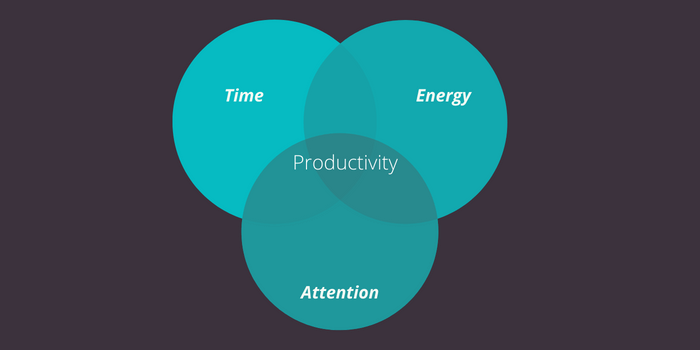
Attention Management: Take Back ControlDavid21 April 2026Self-Development & Productivity The Moment You Realize You’ve Lost Control You sit down to do something important. You open your laptop, take a sip of coffee, and tell yourself: “Let’s focus.” Then it happens. A notification.A quick check.A message.Another tab. Suddenly, 45 minutes are gone — and you haven’t done anything meaningful. Not because you’re lazy. Because your attention is being pulled apart. This is the reality of 2026. And it’s exactly why attention management has become the most valuable productivity skill you can build. What Is Attention Management? Attention management is the ability to consciously direct and protect your focus on what matters, despite constant distractions. Unlike time management, which organizes your schedule, attention management controls where your mental energy goes. And that changes everything. The Real Problem: Your Brain Is Overstimulated We live in an environment designed to: capture your attention keep you engaged prevent you from leaving Every notification triggers a dopamine response. Not enough to satisfy — just enough to keep you checking. Over time, this creates: shorter attention spans constant distraction reduced deep focus ability This isn’t a discipline issue. It’s a system problem. Why Time Management No Longer Works You can have the perfect schedule… …but if your attention is fragmented, nothing gets done properly. Time Management vs Attention Management Time management = planning your day Attention management = protecting your focus You don’t need more hours. You need fewer distractions inside those hours. The Science Behind Focus Your brain has two modes: Focused Mode deep thinking problem-solving creativity Reactive Mode notifications quick responses shallow work Most people live in reactive mode all day. High performers protect focused mode. The 5 Rules of Attention Management Remove distractions before starting work Work in focused time blocks (60–90 min) Avoid multitasking completely Limit dopamine-heavy inputs (social media) Schedule daily recovery time The Shift That Changes Everything People don’t suddenly become more productive. They become less distracted. That’s the shift. When you remove constant interruptions, your brain doesn’t need to work harder — it simply works better. How to Take Back Control 1. Design Your Environment Focus is not about willpower — it’s about setup. Turn off notifications Keep your phone out of reach Use full-screen mode 2. Work in Deep Focus Blocks Your brain works best in cycles. 60–90 minutes deep work followed by real breaks This aligns with how attention naturally functions. 3. Train Your Attention Like a Muscle Start small: 20 minutes focus gradually increase Consistency beats intensity. 4. Reduce Input Before Increasing Output Most people consume too much. Try this rule: Create first. Consume later. It instantly shifts your attention toward meaningful work. 5. Build Daily Reset Moments Focus without recovery leads to burnout. Book Recommendations Deep Work — Cal NewportThe foundation of focus and distraction-free productivity.BUY NOW Stolen Focus — Johann HariExplains how modern environments are destroying attention spans.BUY NOW Why This Matters More Than Ever In a world where everything is competing for your focus… The ability to control your attention becomes a superpower. Not because it makes you faster. But because it makes you intentional. Conclusion: Take Back What’s Yours You don’t need more productivity hacks. You need fewer distractions. Because once your attention is clear: work becomes easier progress becomes visible life feels calmer Attention is your most valuable resource. Start treating it that way. FAQ 1. Why is attention management important? Because distractions reduce productivity, focus, and decision-making quality. 2. How can I improve my attention span? By reducing distractions, working in focus blocks, and training your brain gradually. 3. Is attention management better than time management? Yes — because without focus, time management doesn’t work effectively. Your focus isn’t broken.Your environment is. Fix that first. INTERESTING POSTS FROM OUR TEAM Best Minimalist Desk Setup for Focus (2026 Guide) Read More Tim5 May 2026 Slow Travel Lifestyle: Travel More, Stress Less Read More Lisa28 April 2026 What to Do When the Market Drops: How Smart Investors Handle Uncertainty Read More Sophie24 April 2026 Attention Management: Take Back Control Read More David21 April 2026 Load More
What to Do When the Market Drops: How Smart Investors Handle Uncertainty Read More Sophie24 April 2026