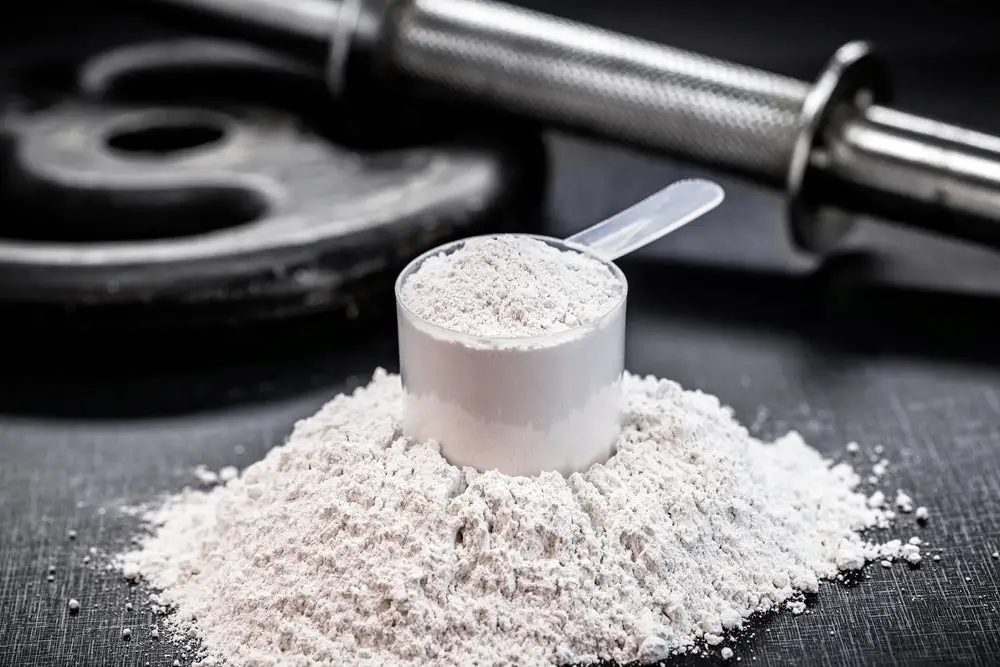
The Supplement Everyone Thought They Already Understood
A few years ago, creatine felt like an old story.
Everyone in the gym had tried it once. A scoop in a shaker bottle, a few heavier workouts, and eventually the tub disappeared somewhere in the back of a kitchen cabinet. It was seen as a “bodybuilding supplement” — useful maybe, but nothing revolutionary.
Then something changed.
Recently, creatine has quietly reappeared everywhere. Not just in fitness circles, but in podcasts about longevity, mental performance, recovery, and daily energy. People who never cared about supplements are suddenly asking questions again.
And one topic keeps popping up online:
Should you take 20 grams per day — and what about ratios like 4:1:1?
The truth is, the creatine comeback says less about a new supplement and more about how fitness itself is evolving.
Why Creatine Works (And Why It’s Often Misunderstood)
Creatine does not directly build muscle.
Instead, it helps your body regenerate ATP, the primary energy source used during explosive movements like lifting weights, sprinting, or jumping.
More available ATP means:
One extra rep during a set
Slightly higher training intensity
Faster recovery between efforts
Over weeks and months, those small performance advantages compound into measurable strength and muscle gains.
This is why creatine is one of the most researched supplements in sports science, with consistent evidence showing improvements in high-intensity performance and strength outcomes.
The 20-Gram Question: Loading Phase Explained
You may have heard people recommending 20 grams of creatine per day.
This comes from the traditional loading phase, designed to saturate muscle creatine stores quickly.
Loading Protocol
20g daily (split into 4 doses)
Duration: 5–7 days
Followed by 3–5g daily maintenance
Modern Perspective
Research shows loading works — but here’s the important part:
Long-term results are nearly identical whether you load or simply take 3–5g daily.
Loading speeds things up, but it doesn’t improve final outcomes.
Many athletes now skip loading because:
High doses can cause stomach discomfort
Consistency matters more than speed
Daily intake reaches full saturation within a few weeks anyway
This reflects a broader 2026 fitness trend: sustainable habits beat aggressive shortcuts.
The Confusion Around “Creatine Ratios” (4:1:1 Explained)
Here’s where things get interesting — and where a lot of misinformation exists online.
You may see supplements marketed with ratios like:
2:1:1
4:1:1
8:1:1
Many people assume these ratios apply to creatine itself.
They don’t.
These ratios actually belong to BCAAs (Branched-Chain Amino Acids):
Leucine
Isoleucine
Valine
Supplement companies often combine creatine with BCAA blends, which creates confusion.
Creatine itself has no ratio.
So What Is the Best Ratio — If You Use BCAAs?
Scientific evidence consistently supports:
2:1:1 as the balanced ratio
Why?
Leucine activates muscle protein synthesis through the mTOR pathway, but muscle growth requires all essential amino acids working together.
A 2:1:1 ratio closely mirrors natural muscle amino acid composition and provides balanced support without oversaturating leucine.
What About 4:1:1?
Higher-leucine formulas like 4:1:1 became popular through marketing claims suggesting faster muscle growth.
However, research comparing ratios shows:
Both 2:1:1 and 4:1:1 can support training adaptation
No consistent evidence proves 4:1:1 superior
In simple terms:
More leucine doesn’t automatically mean more results.
For most people eating enough protein, additional BCAAs may add minimal benefit anyway.
The Real Upgrade: Choosing the Right Creatine Form
If ratios aren’t the key factor, what actually matters?
The form.
Despite endless supplement innovations, scientific reviews continue to reach the same conclusion:
Creatine monohydrate remains the gold standard.
Reasons:
Most researched form in history
Proven safety and effectiveness
High absorption rate
Affordable and reliable
Alternative versions like creatine HCL or buffered creatine are often more expensive without consistent evidence of superior performance.
Sometimes the oldest solution really is the best one.